
Mini Piling
We install mini piles for home extensions, new build houses and industrial or commercial units with domestic extensions making up the majority of our workload. The type of piles we install are called steel cased, bottom driven piles and are installed using either a Grundomat mole, or a small piling rig. The mole is ideal for jobs with restricted access such as domestic extensions or piling inside existing buildings as 2 men can carry it, whereas rigs are used for larger piles that may be needed on new build houses or units. We install pile sizes ranging from 100mm to 323mm with the 150mm pile being most commonly used on house extensions. We usually provide a design from a structural engineer or we can work from a design you may have, ensuring the work is compliant with building control.
Reasons you may have to use mini piling
It is usually either building control or whoever has dug for your foundations that tell you a traditional foundation is unsuitable and therefore piling is recommended. Often it is down to ground type but there are a few other reasons why piling is the best option. Below are the mains reasons you may be advised to pile.
- Made up ground – This is quite common on newish build houses where the developer has built the ground levels up with back fill.
- Insufficient natural ground – Older houses were often built on ground that today’s regulations deem unsuitable and digging deeper doesn’t result in finding adequately strong enough soil strata.
- Existing house is piled – If your existing house is piled, the building control and structural engineers recommend sticking to one foundation type where possible to cut down on differential settlement.
- Trees nearby – If you have trees in the vicinity as well as clay ground conditions, piling with heave protection is often required which aims to allow the ground to be able to swell without lifting your new building and cracking appearing.
- Drains in the immediate vicinity – If there are public drains passing under or very close to your building, then piling can be required so that the weight of the extension does not interfere with the fall on the drains.
- Building on a slope/near a retaining wall – If a building is next to a slope there can be inadequate masses of ground to stop the building moving laterally (sideways) and similar with the retaining wall, the lateral shifting of weight should not bear on the retaining wall
- Water table high – Sometimes the water table is higher than the depth you have to dig to get to good strength ground and the trench continually fills and collapses
The process of mini piling
The process of mini piling is slightly different depending on whether the piling is done with a rig or a Grundomat mole. With the mole, the job is cheaper if you dig out beforehand, with a rig, it has to be dug after the piles are installed. Nearly all extensions are piled with the mole. If you have dug out already this is normally ok, if not, we will tell you the dimensions of the trench to dig. If a rig is being used for larger piles then the ground needs to be of decent firmness.
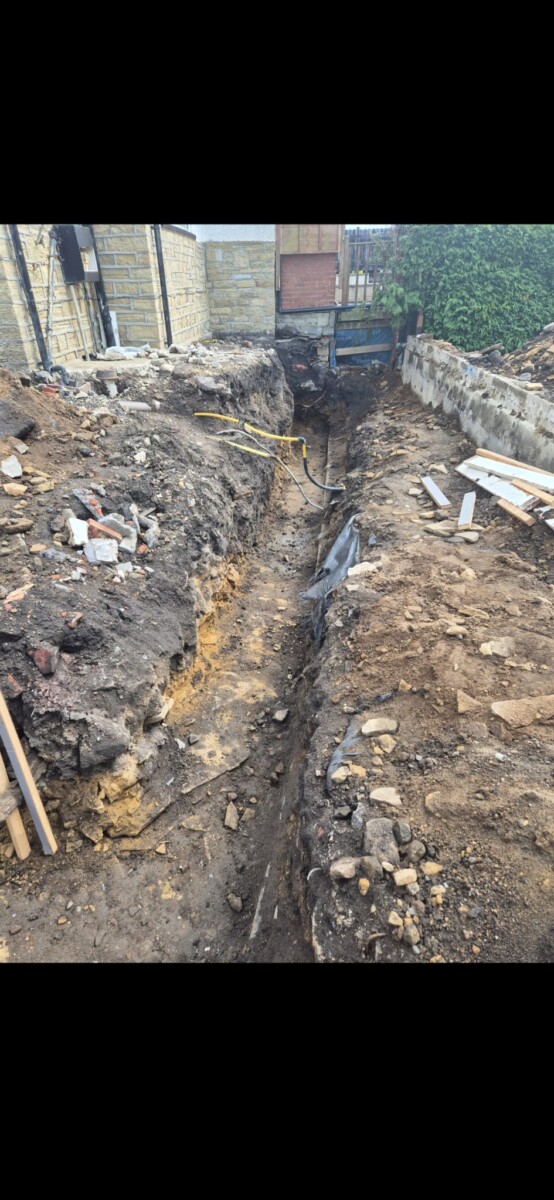
A lot of the time, a job has been dug out before you realise it needs piling. Here they have dug out the entire job and the building inspector has said the ground is of inadequate strength for a traditional foundation. Piling was then recommended. If you have drains passing through, let us know as this can alter any depths you will need to dig too.
When you contact us, we will ask you to send us the plans for your new building or if it is a small extension dimensions will suffice. Either email us the plans or send them though whatsapp. If we have any queries we will get back to you, and then we will send you a price.
Once a price is agreed, we send you job details to the structural engineer, assuming you haven’t already got a pile and beam design, who the does a design which building control require. If you already have a design, send us that to quote from.
We then turn up on site and begin to pile. If it is a stand alone building, the piles need to be set out, whereas for an extension we simple measure their positions. When we are piling with the mole, we put around 1 metre of limetone chippings inside the starter pile, and then place the mole inside. We connect it up to the compressor and start knocking the pile down. With a rig, we put about a metre of gravel in, strap the pile to the rig, and begin dropping the weight inside the pile. Once the 2 metre length of pile has been knocked almost in, we connect another length, and weld them together. This process happens until the pile is moving a certain measurement which is called a set. With the mole, the pile has to move less than 10mm in 10 seconds, this measurement is specified by the manufacturer of the mole. With the rig, an engineer specifies how much the set can be per 10 blows and is calculated by a few things with the main ones being the weight being dropped, the height of the weight being dropped and the amount of weight each pile will take.
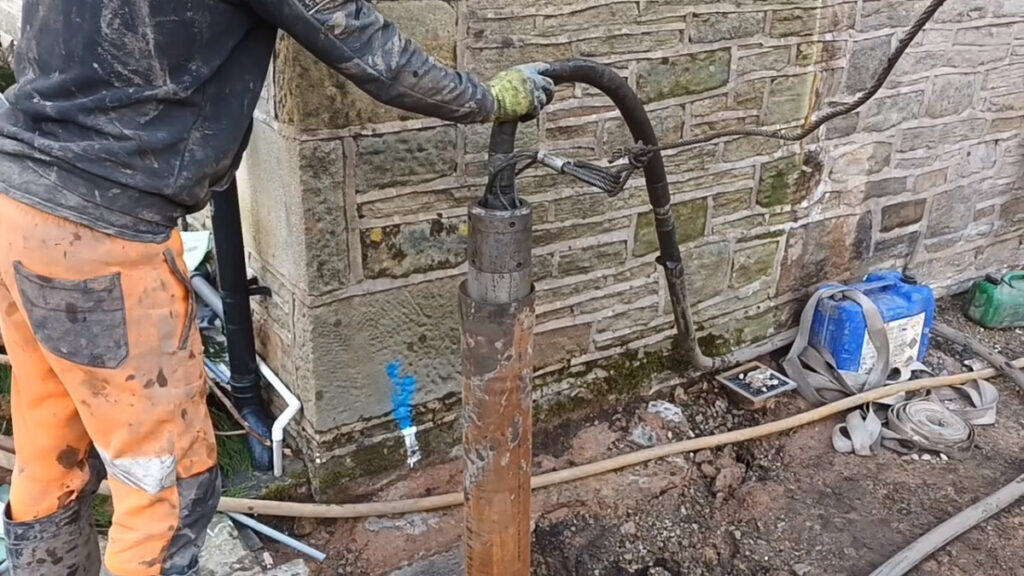
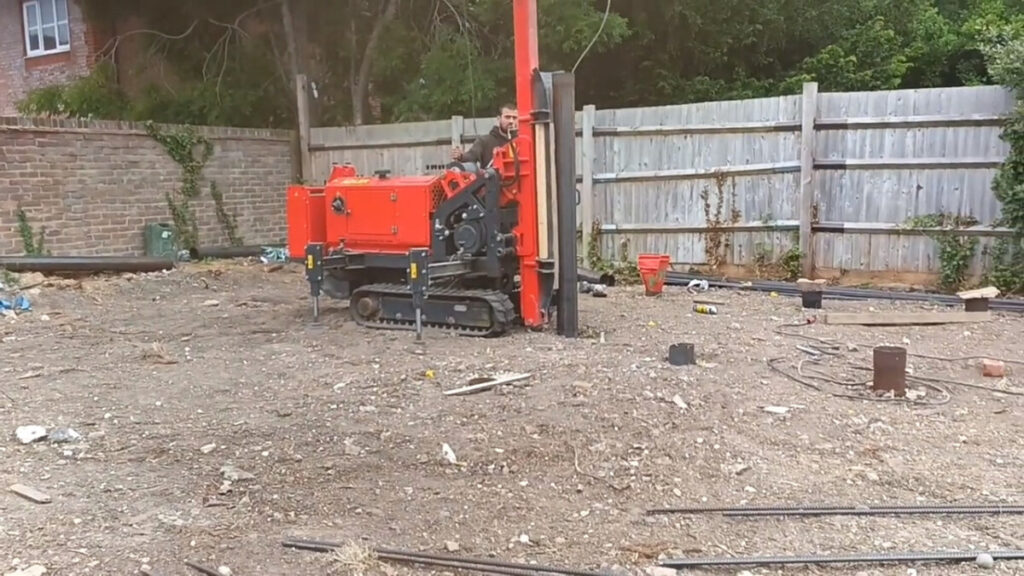
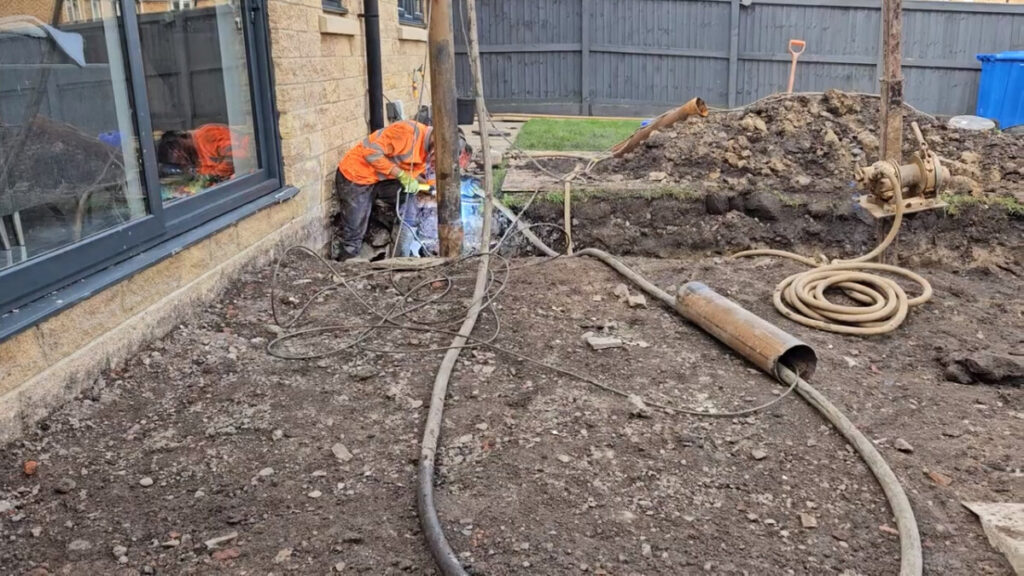
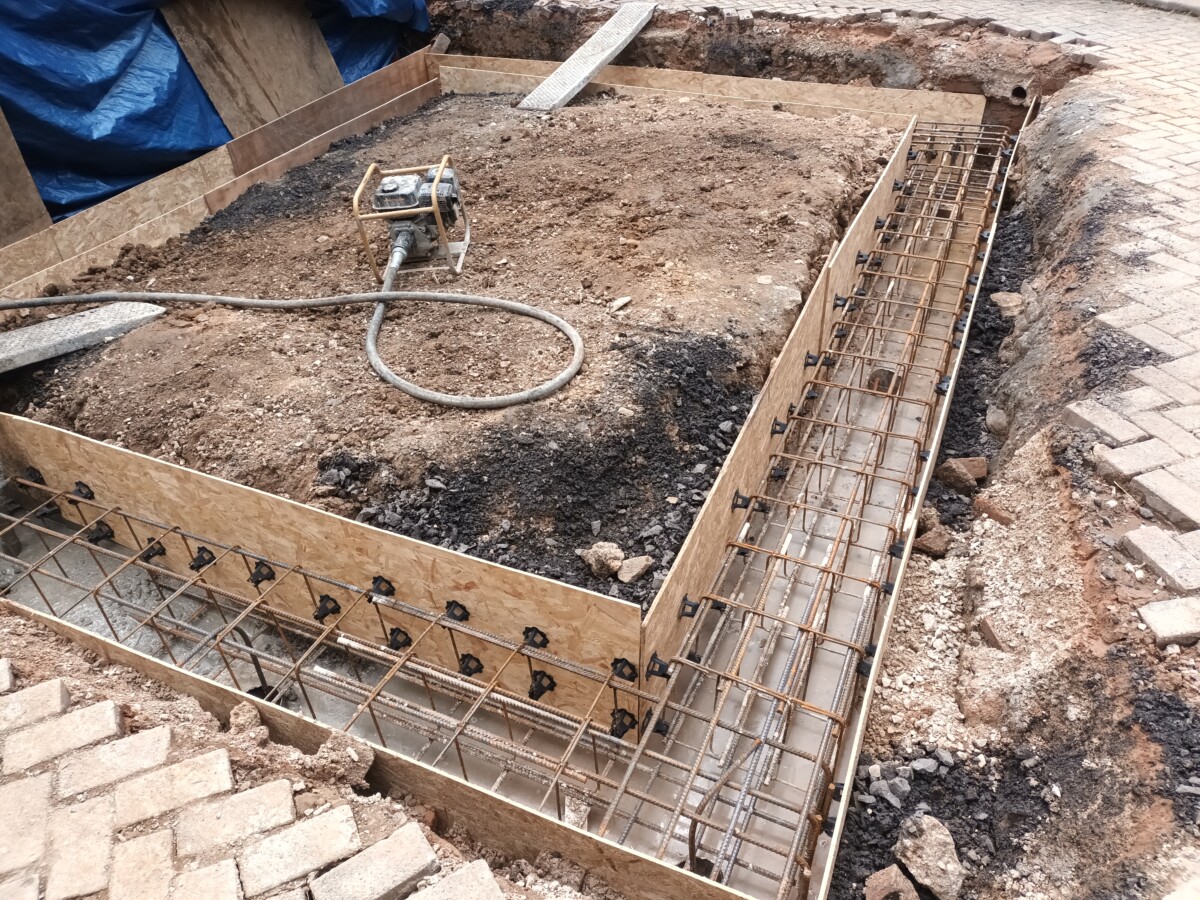
Once all the piles are driven to set, we then determine the height we will cut all the piles at. The piles are usually stuck out of the ground 50mm, but different engineers specify different heights. We use the laser level to mark the piles at the correct height and then cut them all. After they are cut, the reinforcement that the engineer has designed is then placed on top of the piles, and tied together. A starter bar is then placed down the piles that connects the piles to the reinforcement and this prevents any lateral (sideways) movement. If the trench is too wide and shuttering is being installed, we then put spacers onto the reinforcement and place the shuttering up against the spacers, back filling behind the shuttering.
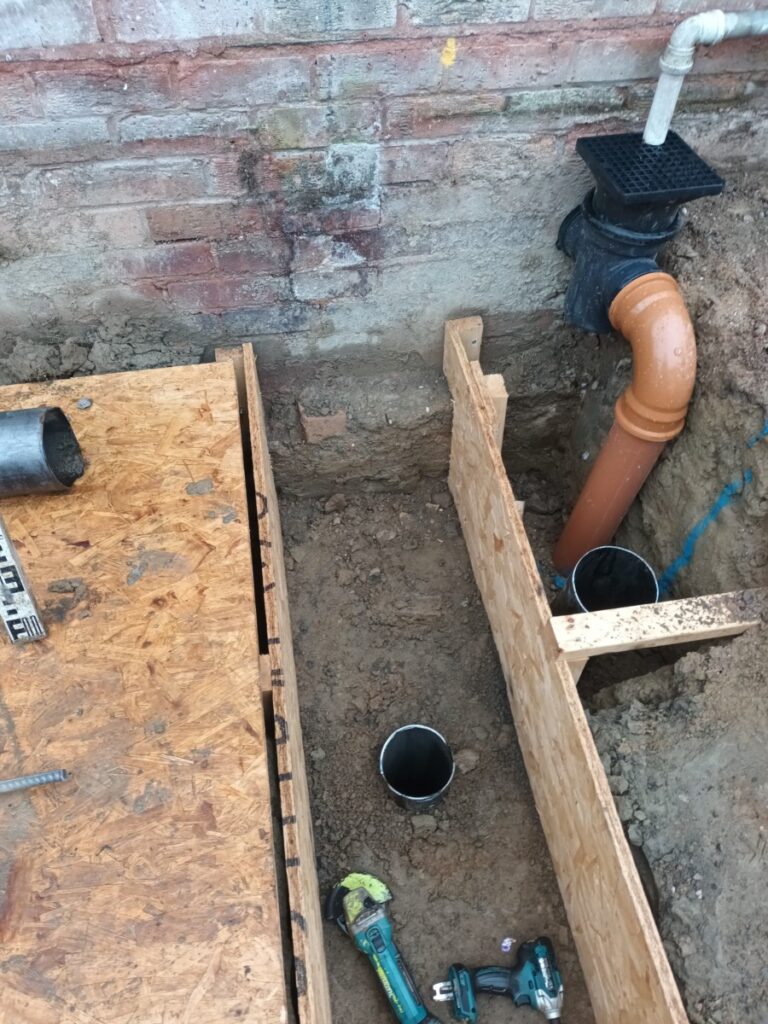
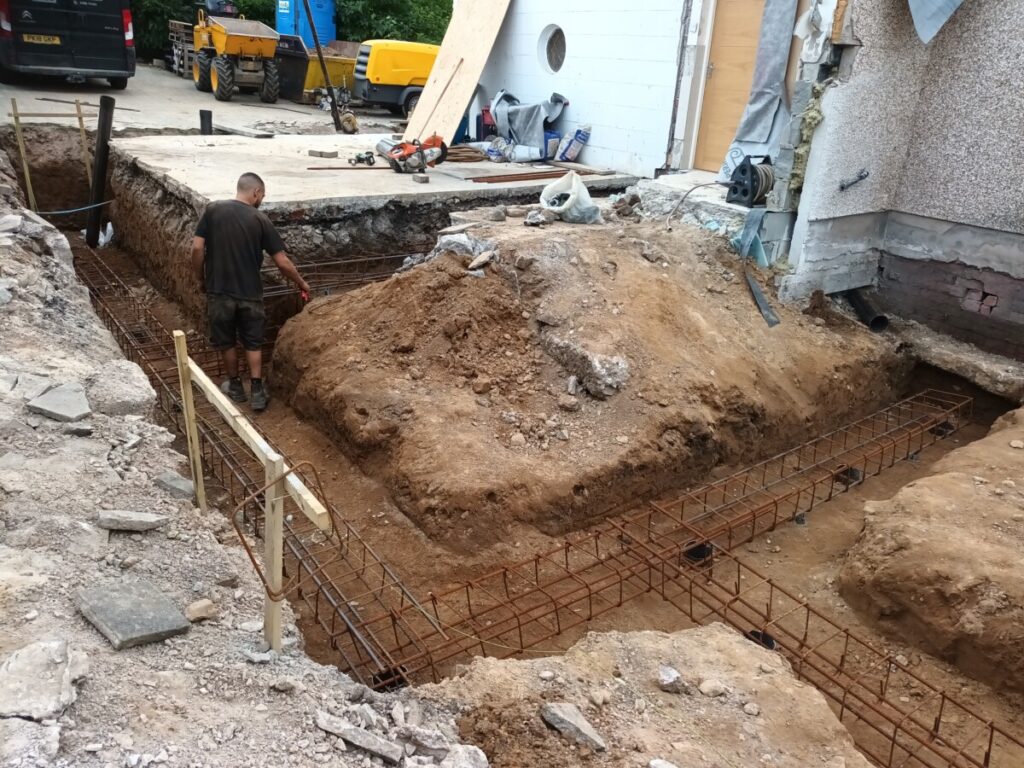
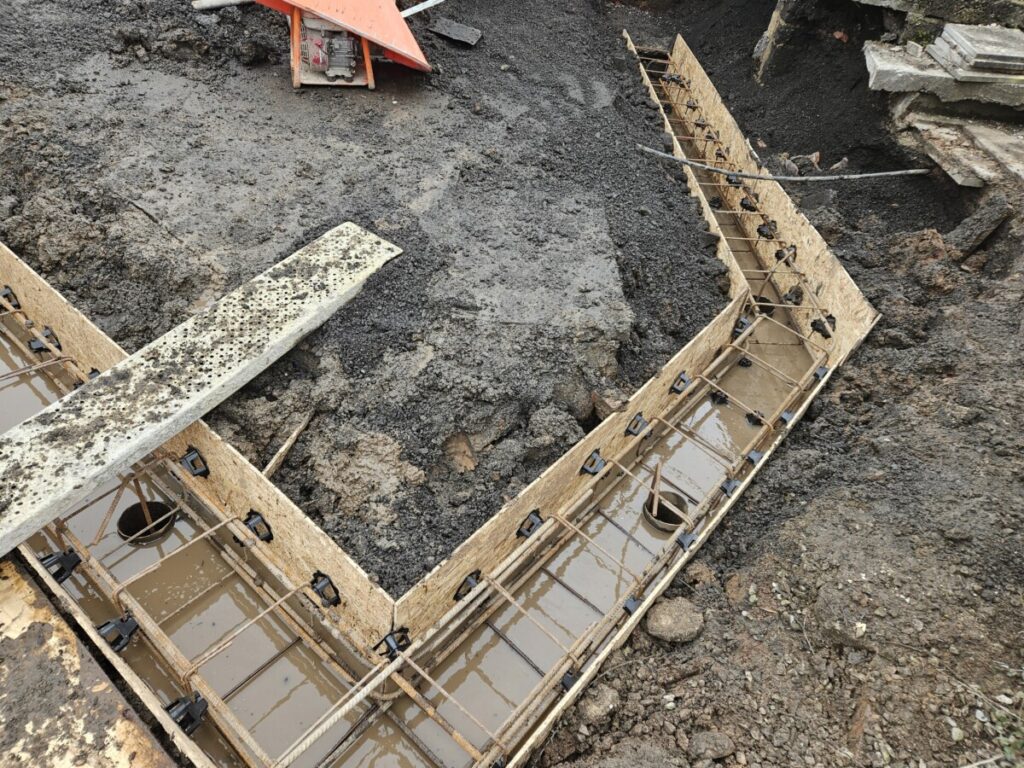
When the piles, reinforcement and shuttering are installed, the work needs to be inspected by building control. They come out and check that the piles are in the location they should be, the reinforcement is as designed, and there is enough space around the steel rebar to get enough concrete around so the beam achieves its designed strength. When the inspector has given the OK, we can then go ahead and concrete the job.
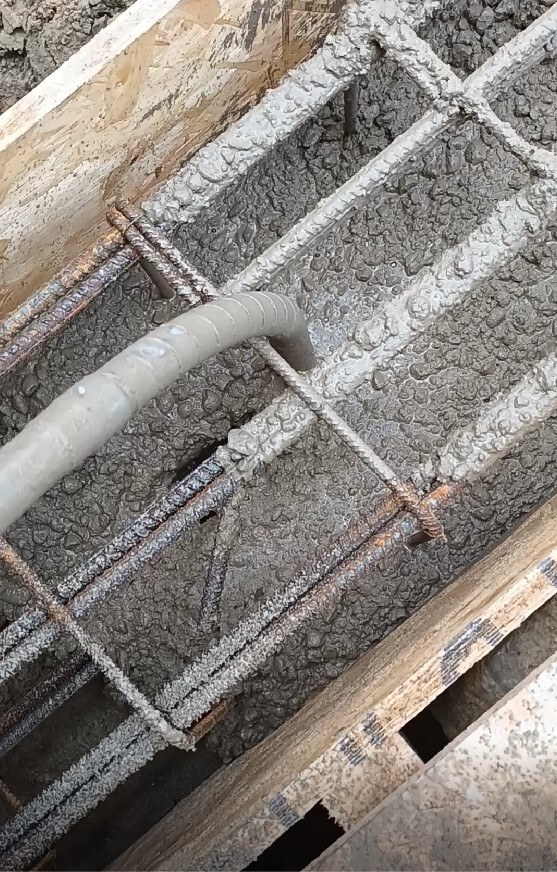
Here as the concrete is poured into the trench, it is vibrated down the piles, ensuring they are full.
<<<<<<<<<<<<<<<<<<<<<<<<<<<<<<<<<<<<<<<<
>>>>>>>>>>>>>>>>>>>>>>>>>>>>>>>>>>>>>>>>
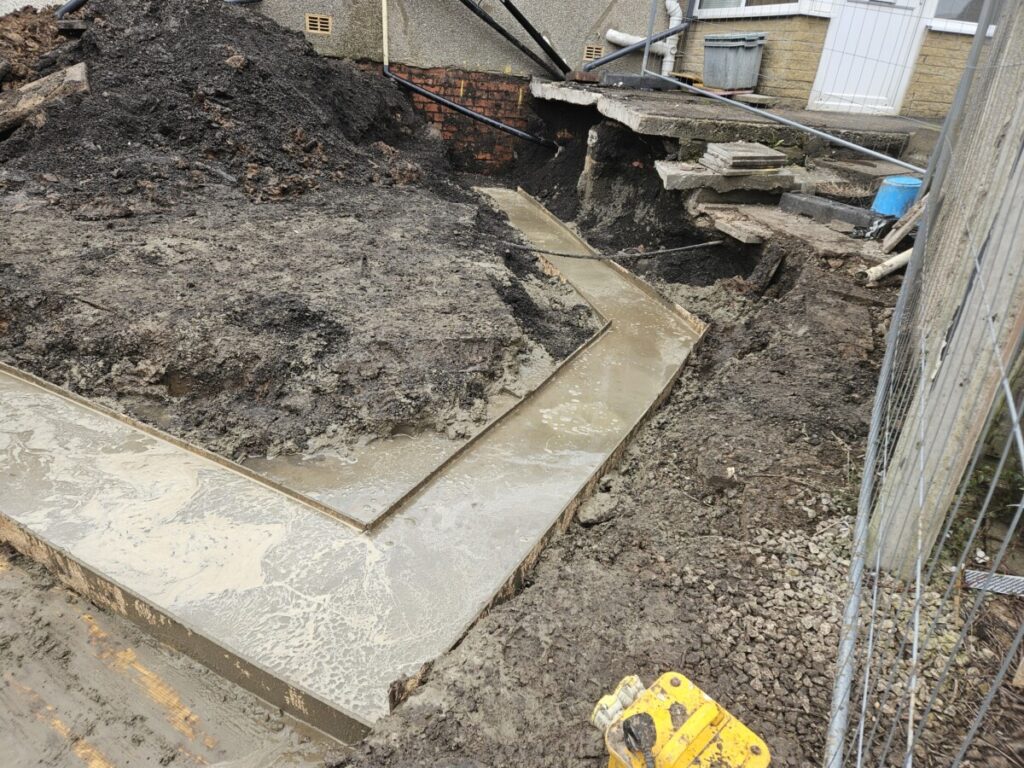
Once the piles are full, we level the concrete with the aid of the laser level, making a nice flat surface for your bricklayer.
We're piling specialists
FirmBase are piling specialists with the experience and expertise to provide you with a professional service at a competitive rate for any job where piling is needed.
We install steel cased, bottom-driven piles in sizes ranging from 100mm to 373mm. By far the most common size used is 150mm which are used on extensions, a lot of houses and smallish industrial units. 100mm, 150mm & 168mm piles are driven by a tool called a mole. The mole is good for limited access areas such as back gardens or inside buildings as 2 men can carry it. Piles over 168mm are driven by small piling rigs.
At FirmBase Piling we make it simple for you
Mini piling for extensions
Mini piling for new builds
Mini piling for commercial structures
An efficient, high-quality, no-bull service
Work performed by honest tradespeople who care about doing it right
A competitively priced service backed by honest quotes and no hidden costs or surprises

A few words from FirmBase owner, Gaz:
Im here to grow my business so my reputation is the most important aspect of how we work. I will make suggestions if i know of ways to save your job money and try to take problems away. I am here to do a good job, and most importantly it is done right, with the piles being sent to the correct set. Being a bricklayer myself, I know the need for level concrete, so we use the laser level when it comes to concreting. We will work with you/your builder to overcome any problems that may arise which are specific to your job. This could be drains or obstructions in the ground. I do the job correctly and with integrity in a no nonsense style.
If you have any queries at all regarding piling, please do get in touch. Either email, WhatsApp or ring me and I will be happy to give you honest advice. If your query is urgent, message anytime.
Mini piling could be the cost-effective yet lasting solution for your construction project. Contact our Lancashire based team now on:
Mini Piling FAQ's
How much does mini piling cost?
Obviously the cost is entirely job dependant. We will give you a price down to a certain depth, usually 4 metres and then a rate per metre until the pile reaches set. You usually wont know how deep they are going to go, even if soil samples or local boreholes have been checked, they can still differ. Also the linear length of beam required helps to dictate a price, sometimes internal legs of beam that aren’t obvious to you are required. If heave protection is required, this is also an additional cost. If you want a rough idea, just email me some dimensions and your location and i will get back to you.
How many piles are needed for my extension or house?
The amount of piles needed is decided by a structural engineer. It’s not us who decide on this and they base the amount needed by working out how much weight need to be carried. Roughly speaking, there is a pile on every corner and for the standard 150mm pile, a single storey extension requires them every 2.5 metres whereas a double story building will have them around 2 metres. With larger buildings can come larger piles, which usually then require a larger beam.
How long does piling take?
Because you don’t know how deep the piles will go, its hard to ever give definite times. For say a 4m x 4m extension, we would normally pile and beam it in the day, ready for the building inspector, and then come back another day to concrete it. For a large extension you are probably talking 2 days to pile, one day for the beam, and then one day to concrete. As a rough guide for the piling only, you normally get somewhere between 30 and 40 linear metres of pile in per day. Depending on the ground though, sometimes it can be a really slow drive from the very start, all the way until it reaches what is called set, so the piles can take far longer.
Do i need to go to a structural engineer for piling works for my extension or new build?
A structural engineers design is needed for building control and we work with our structural engineer all the time. This gives us the benefit of knowing his preferred beam design so we can usually have these made before the job starts and also if we need to move any piles for say if there is a drain or other service in the way, they are usually a quick phone call away. That being said, some people do come to us with a design, maybe you have a preferred and trusted engineer, and we can quote from their plans. With that, we then usually have to order what they have designed.
Is heave protection needed for piling?
Heave protection is used to create a void under the piled ring beam. If you have trees nearby and the ground is clay, then this ground can expand if the trees stop sucking out the water. Oak trees especially suck out a huge amount. To stop the beam being lifted, the void created by the heave protection is somewhere for the clay to expand to and not put any pressure on the beam.
How deep will my piles go?
As a general rule you have no idea. On average most jobs go between 4 and 6 metres, but I have had one go 17 metres, sometimes they will only go 2 metres You can get soil samples taken or go onto the British Geological Survey website and see if there are any boreholes nearby to have a look at ground conditions. With the mole, the piles are driven down until they are moving less than 10mm in 10 seconds, this is called the “set”. This is dictated by Grundomat, the manufacturer of the mole. If a rig is being used to drive piles, then an engineer will give a “set” of how much the pile can move with so many drops of the weight, and is dependent by how much weight is on the piles.
